

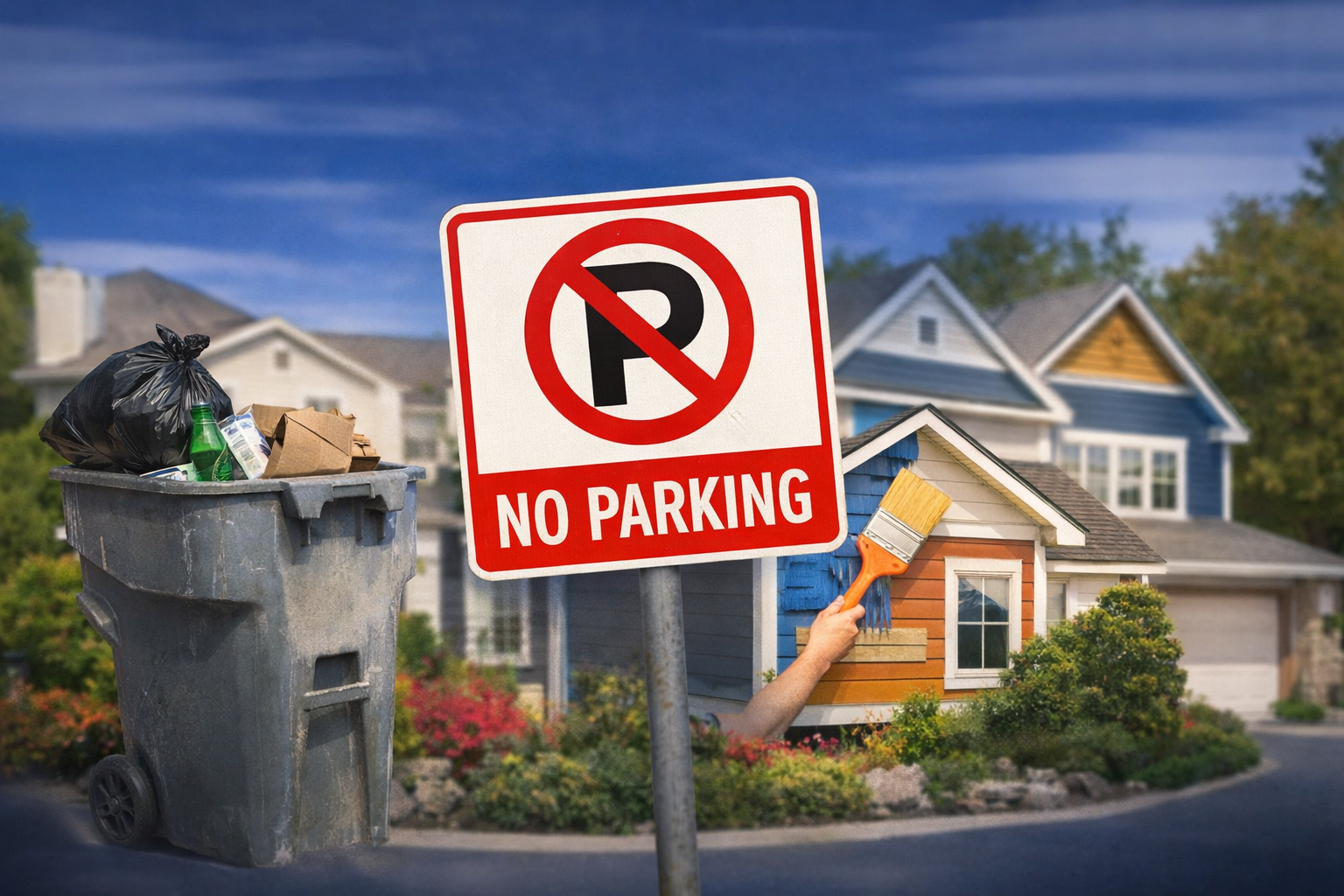
Living in a homeowners association comes with a lot of benefits, from maintained common areas to protected property values. But it also comes with rules that can sometimes catch homeowners off guard. The reality is that most violations are not intentional. They happen because homeowners are unaware or unsure of the guidelines. The good news is that the most common issues are also the easiest to avoid.
Here are the three HOA violations we see most often and what you can do to stay ahead of them.
1. Trash Bins Left Out Too Long
This is one of the most frequent and easily preventable violations. Many communities have specific rules about when trash and recycling bins can be placed out and when they need to be brought back in.
Leaving bins out for extended periods can impact the appearance of the community and may result in notices or fines.
How to avoid it:
Make a habit of bringing your bins in the same day as pickup. If you are traveling or unable to do so, consider asking a neighbor for help.
2. Parking in Restricted or Guest Spaces
Parking violations are another common issue, especially in communities with limited guest parking or strict rules about where residents can park.
This often happens when homeowners or their guests are unaware of designated spaces or community restrictions.
How to avoid it:
Take a few minutes to review your community’s parking guidelines and share them with guests ahead of time. This can prevent confusion and avoid unnecessary violations.
3. Exterior Changes Without Approval
This is one of the most costly mistakes homeowners make. Changes like installing new landscaping, painting, adding fixtures, or modifying your exterior often require approval from the association.
Even small updates can require review depending on your community’s governing documents.
How to avoid it:
Before making any exterior change, submit an architectural request if required. It is always better to ask first than to deal with corrections later.
Why These Violations Matter
HOA rules are designed to maintain consistency, protect property values, and ensure a positive living environment for everyone. When violations occur, they can create additional work for the board and management team and may lead to fines or enforcement actions.
Staying informed helps you avoid unnecessary stress and keeps your community running smoothly.
Final Thoughts
The key takeaway is simple. Most HOA violations are preventable with a little awareness. By understanding the most common issues and taking a proactive approach, you can avoid fines and help maintain the quality of your community.
If you are ever unsure about a rule or requirement, it is always best to check your governing documents or reach out for clarification.