

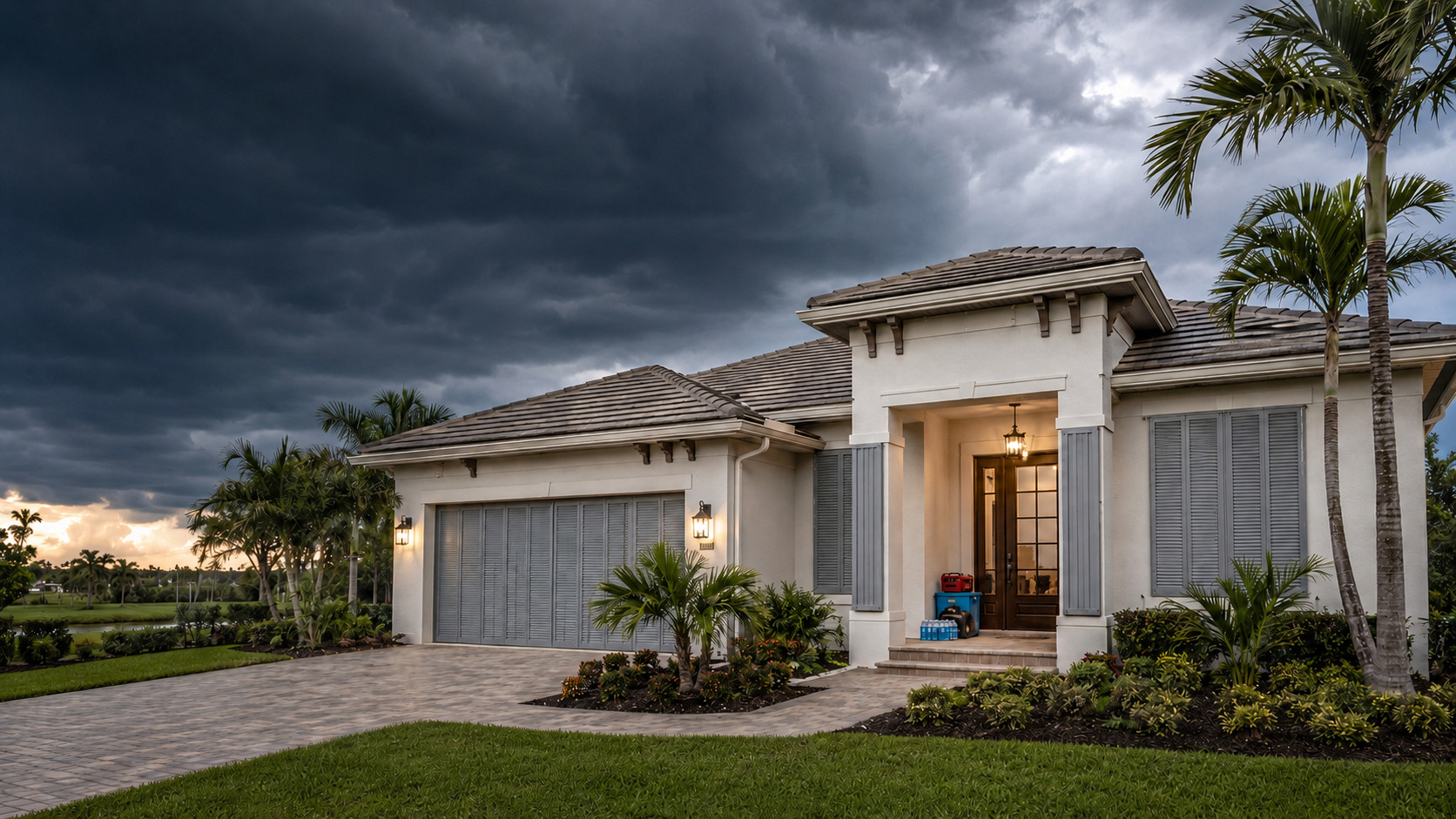
Summer in Southwest Florida can bring hurricanes, tornadoes, flooding, and extended power outages. Preparing before severe weather arrives can help protect your family, reduce damage to your home, and make the recovery process safer and less stressful.
We developed this list with input from experienced Southwest Florida residents who have lived through many major storms. Please bookmark or save it so you can refer to it before, during, and after severe weather.
Before the Storm
- Know your evacuation zone and make a plan.
Confirm whether your home is in an evacuation or flood zone, identify where you will go, and determine how you will get there. Include plans for children, older relatives, family members with medical needs, and pets. Never remain in an evacuation zone after officials order you to leave. - Review your insurance coverage.
Understand what your homeowners or renters policy covers and whether you have separate windstorm and flood insurance. Standard homeowners insurance generally does not cover flooding. Save digital and printed copies of your policies, contact information, and claim instructions. - Document your home and belongings.
Take photos or video of each room, including furniture, electronics, appliances, valuables, and important improvements. Record the exterior, roof, windows, fencing, landscaping, pool area, and other structures. This documentation can help support an insurance claim. - Protect important records.
Store identification, insurance documents, medical information, property records, vehicle titles, prescriptions, and emergency contacts in a waterproof container. Keep password-protected digital copies somewhere you can access away from home. - Build a practical emergency supply kit.
Keep enough drinking water, nonperishable food, medications, pet supplies, and personal-care items for several days. Include flashlights, battery-powered lanterns, spare batteries, portable phone chargers, a weather radio, basic tools, and a first-aid kit. Avoid relying on candles because of the fire risk. - Keep some cash available.
Extended power and internet outages can prevent stores and gas stations from accepting credit cards or electronic payments. Keep a reasonable amount of cash in small bills, but do not store an unnecessarily large amount at home. - Prepare your home’s exterior.
Bring patio furniture, grills, decorations, toys, planters, tools, and other loose objects inside. Trim hazardous branches early, clear gutters and drains, secure trash containers, and verify that shutters or other window protections are ready to use. - Prepare for power and water interruptions.
Charge phones and battery packs, fill vehicles with fuel, and set refrigerators and freezers to colder settings before the storm. Freeze containers of water to help keep food cold. If you use a generator, test it beforehand and review safe operating procedures.
During the Storm
- Stay indoors and follow official instructions.
Remain in an interior room away from windows and exterior doors. Monitor alerts from local emergency officials and the National Weather Service. Do not go outside during a temporary period of calm because the storm may not have fully passed. - Use generators and alternative lighting safely.
Never operate a generator inside a home, garage, lanai, or near doors, windows, or air-conditioning intakes. Carbon monoxide can be deadly even when doors are open. Use flashlights or battery-powered lanterns instead of candles whenever possible.
After the Storm
- Wait until conditions are safe before inspecting damage.
Watch for downed power lines, standing water, unstable trees, damaged roofs, broken glass, gas leaks, and weakened structures. Never drive or walk through floodwater, which may hide electrical hazards, contamination, or washed-out pavement. - Photograph damage before cleaning up.
Document damage to your home and belongings before moving items or beginning permanent repairs. Contact your insurance company promptly and save inspection reports, receipts, estimates, invoices, and communications related to the storm. - Prevent additional damage when possible.
Once it is safe, take reasonable temporary measures—such as covering a damaged roof or removing standing water—to prevent conditions from worsening. Photograph the damage before and after temporary work, and keep receipts for supplies and services. - Be cautious when hiring contractors.
Major storms attract unlicensed or temporary contractors who may demand large deposits, perform poor work, or disappear afterward. Verify licensing and insurance, obtain written estimates, understand the contract, and avoid paying the full amount upfront. - Be patient and prioritize safety during recovery.
Emergency responders, utility crews, insurance adjusters, and contractors may be helping thousands of households. Electrical hazards, flooding, blocked roads, and structural damage will take priority over landscaping, cosmetic repairs, and routine services.